Materials Engineering · Optical Physics · Research
Polariton for Organic Solar Cells
Fabricated silver mirrors and thin films of semiconductor polymers to strong-couple light and matter, investigating effects on photovoltaic properties.
Background
When light is confined in an optical cavity and interacts strongly with a material's electronic transitions, the system enters the strong coupling regime — forming hybrid light-matter states called polaritons. These states carry mixed photonic and excitonic character, and their altered energy landscape can modify how energy moves through a material.
For organic solar cells, the key question is whether strong coupling can change the rate and efficiency of exciton dissociation — the step where absorbed light energy is converted into separated charges. If polariton formation modifies this step, it could offer a new handle on improving organic photovoltaic efficiency without changing the chemical composition of the material.
My Work
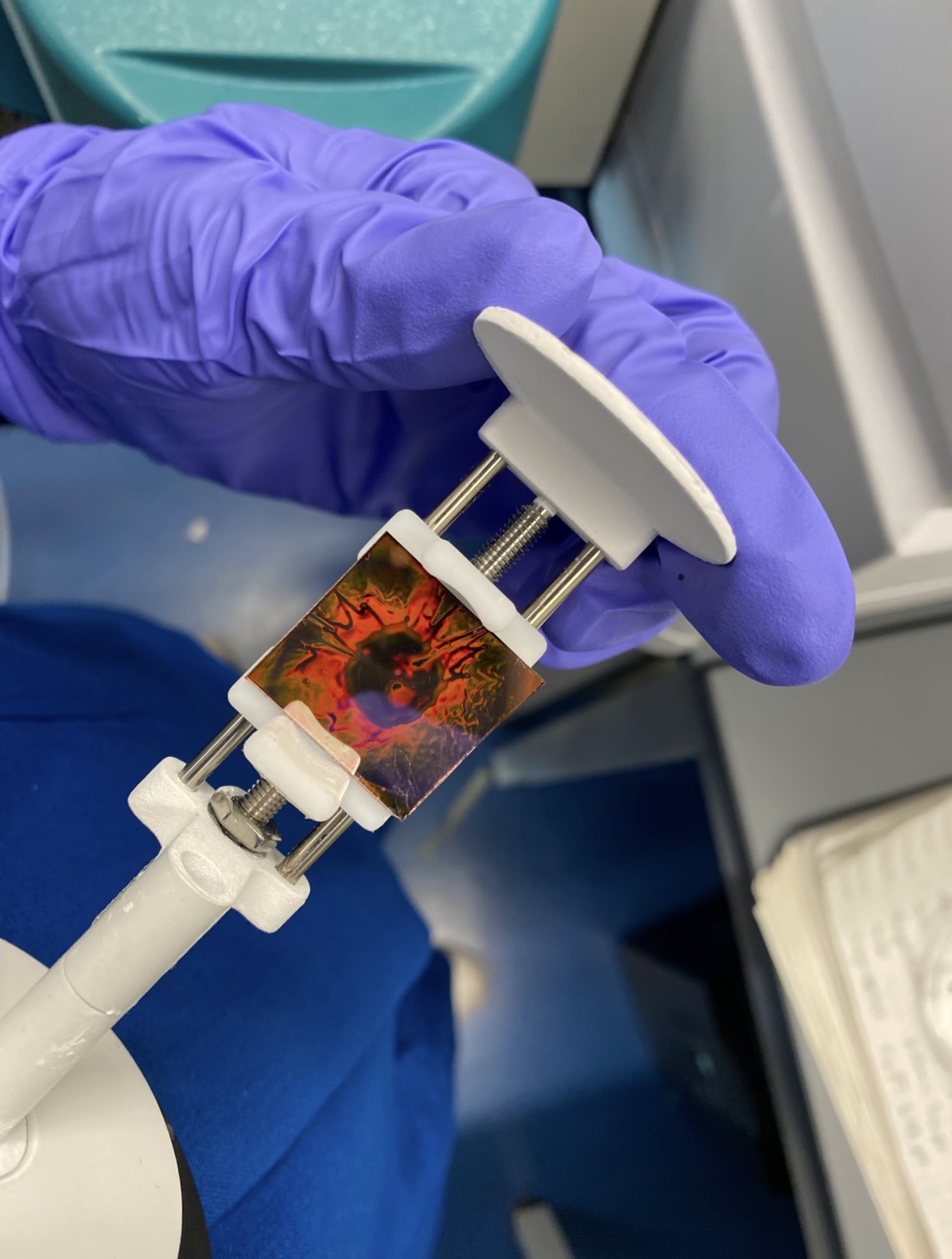
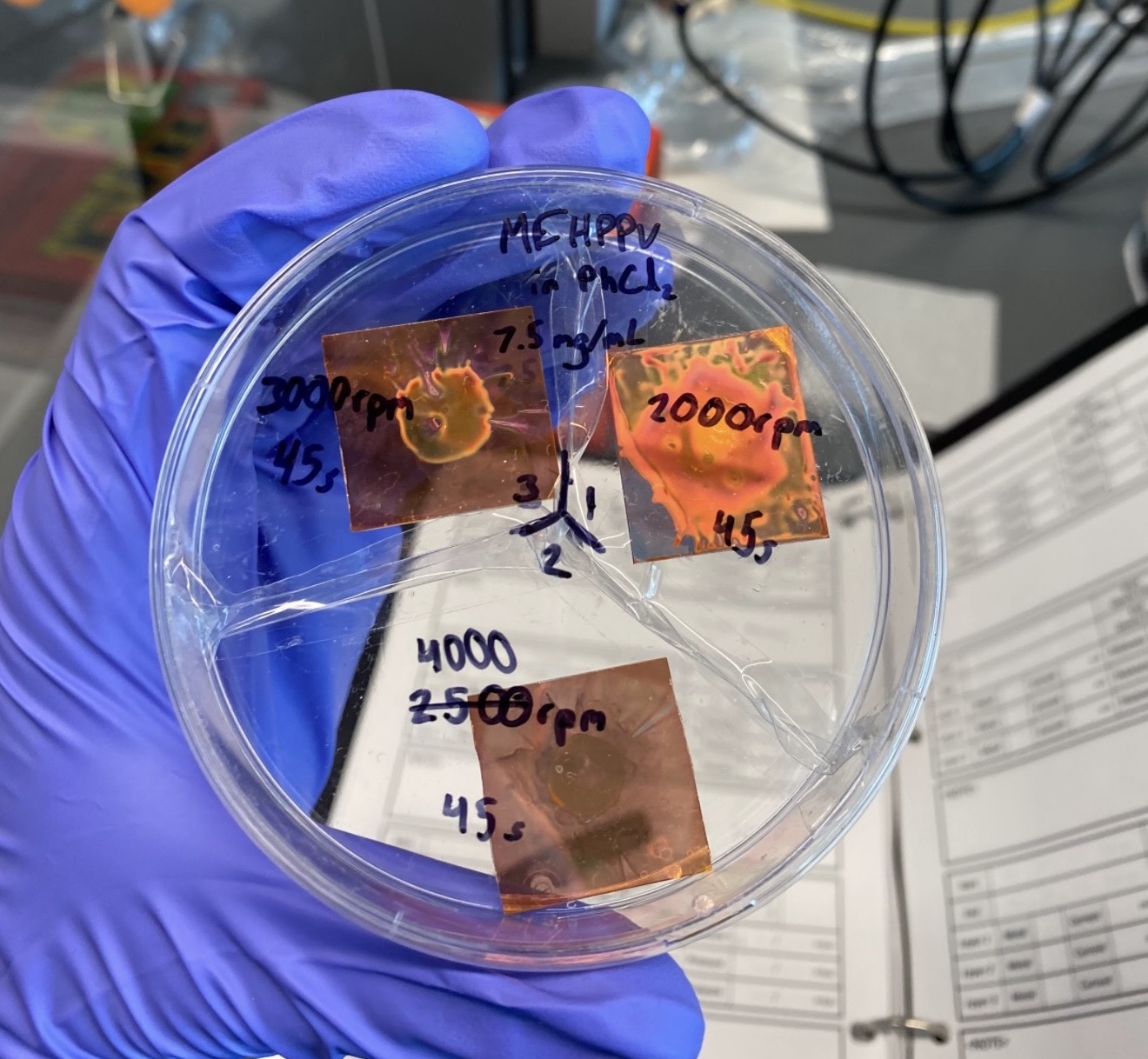
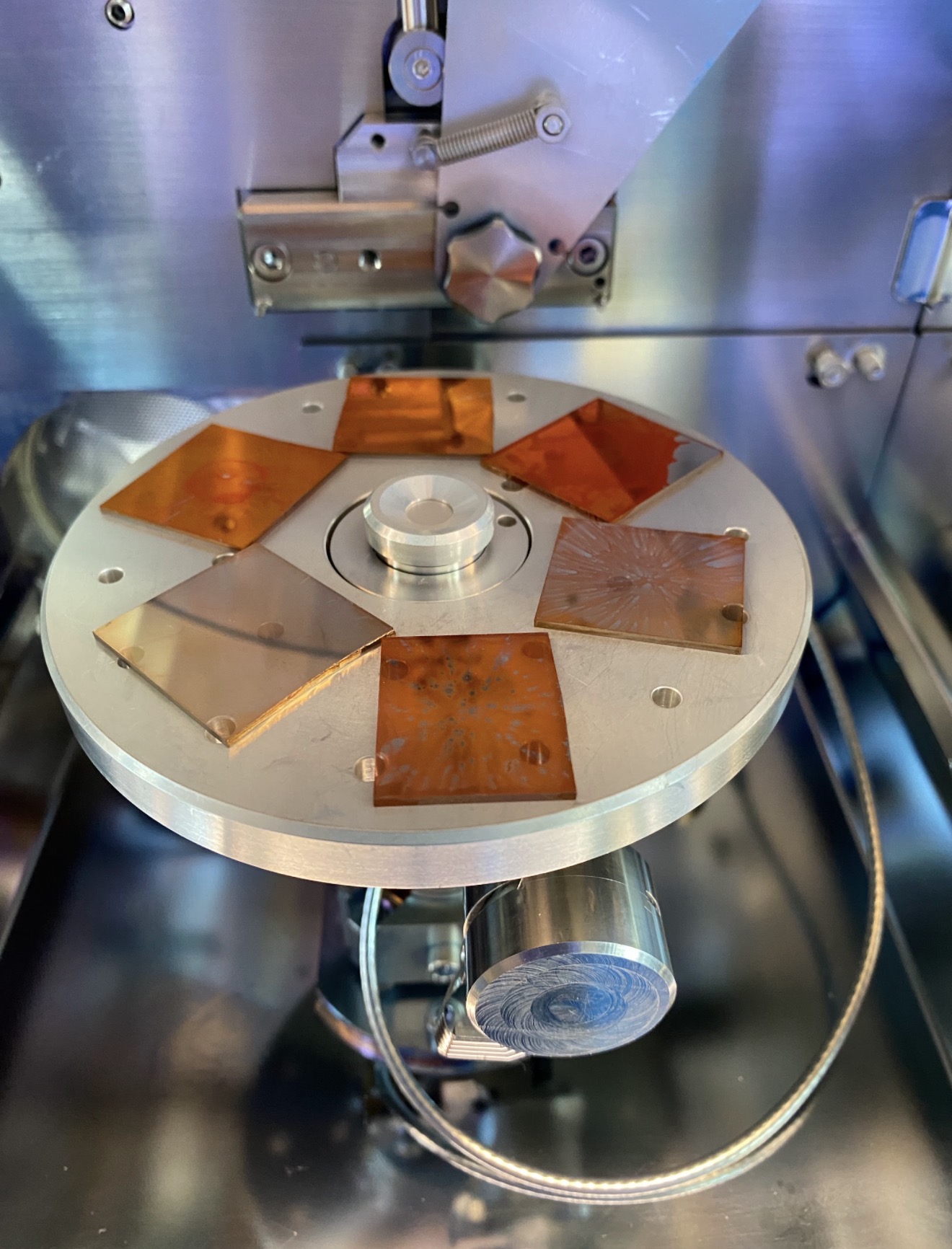
I fabricated optical cavities by depositing silver mirror films via physical vapor deposition, then depositing thin films of semiconductor polymers between the mirrors using spin coating. The cavity geometry was tuned to bring the photon modes into resonance with the polymer's electronic absorption. I characterized the strong coupling through transmission and reflection spectroscopy, identifying the characteristic polariton splitting.