Visual Art · Optics
Expanded Perception:
Peacock Mantis Shrimp
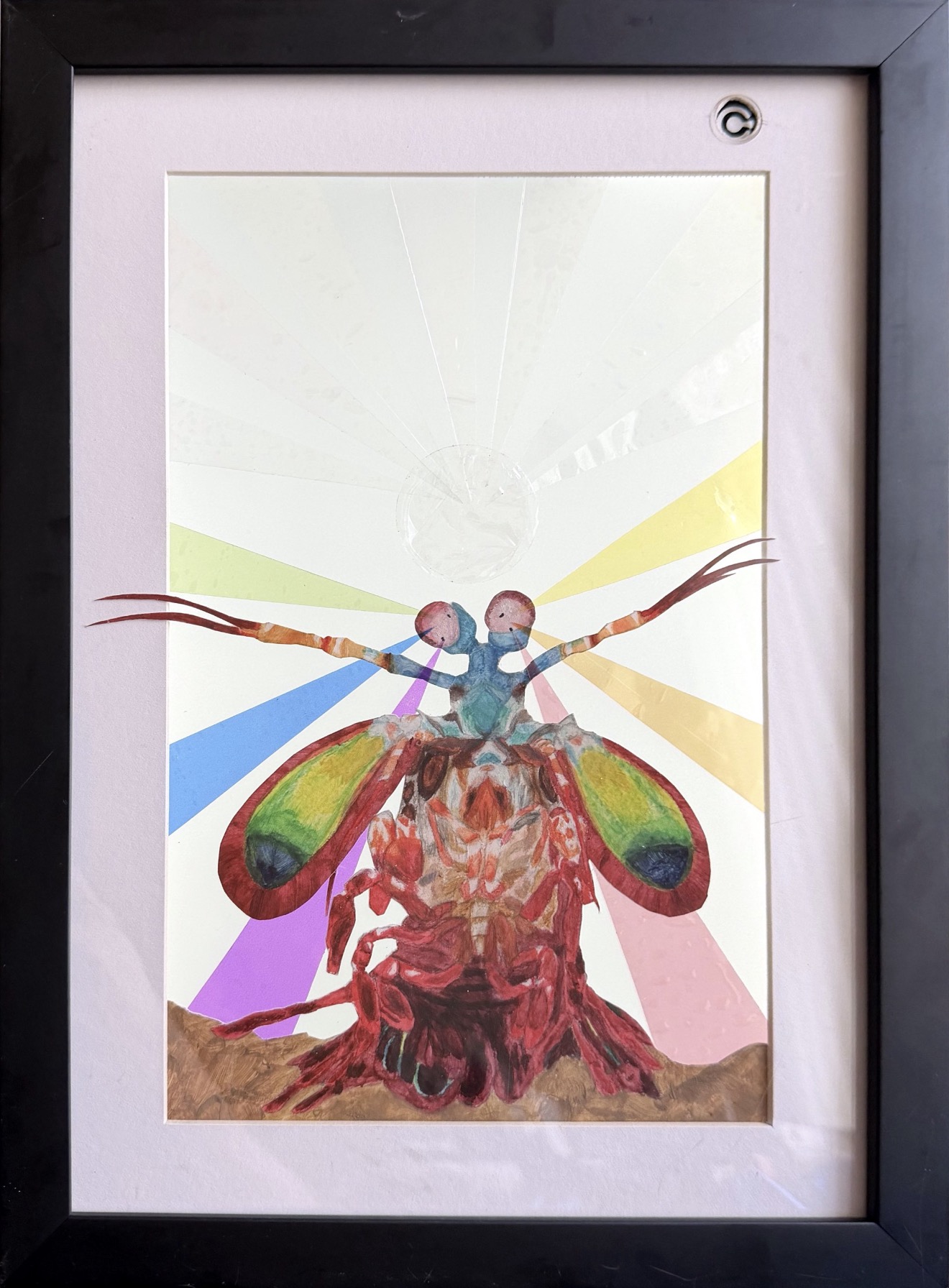
A multilayered artwork combining acrylic painting and polarized light art. Polarized glasses unlock a world of color previously invisible to the naked eye.

Peacock mantis shrimps possess between 12 and 16 kinds of photoreceptor cells — compared to 3 in humans. They can see ultraviolet wavelengths and distinguish types of polarized light. This piece explores what it might be like to see into otherwise invisible light.
The Artwork
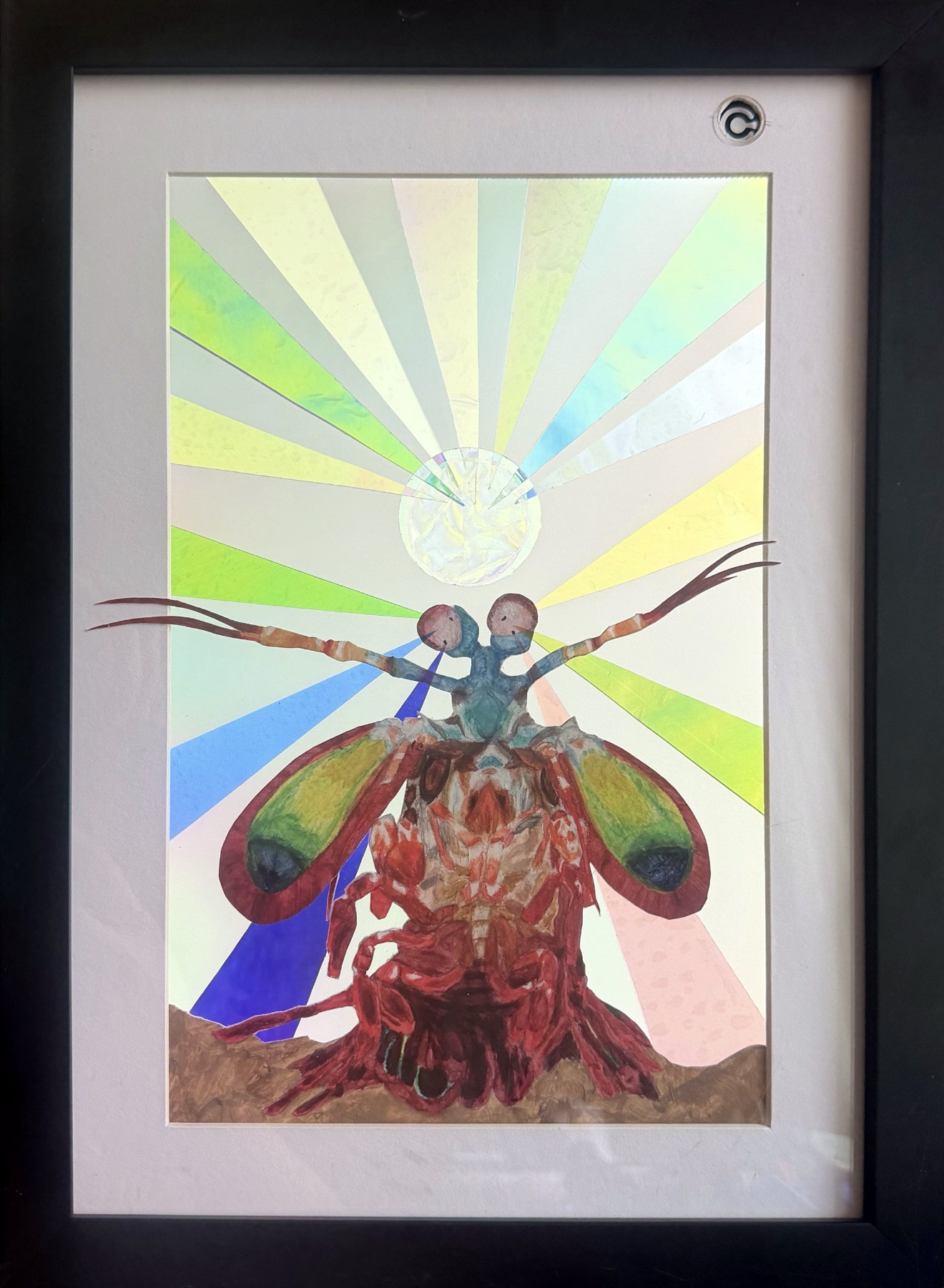
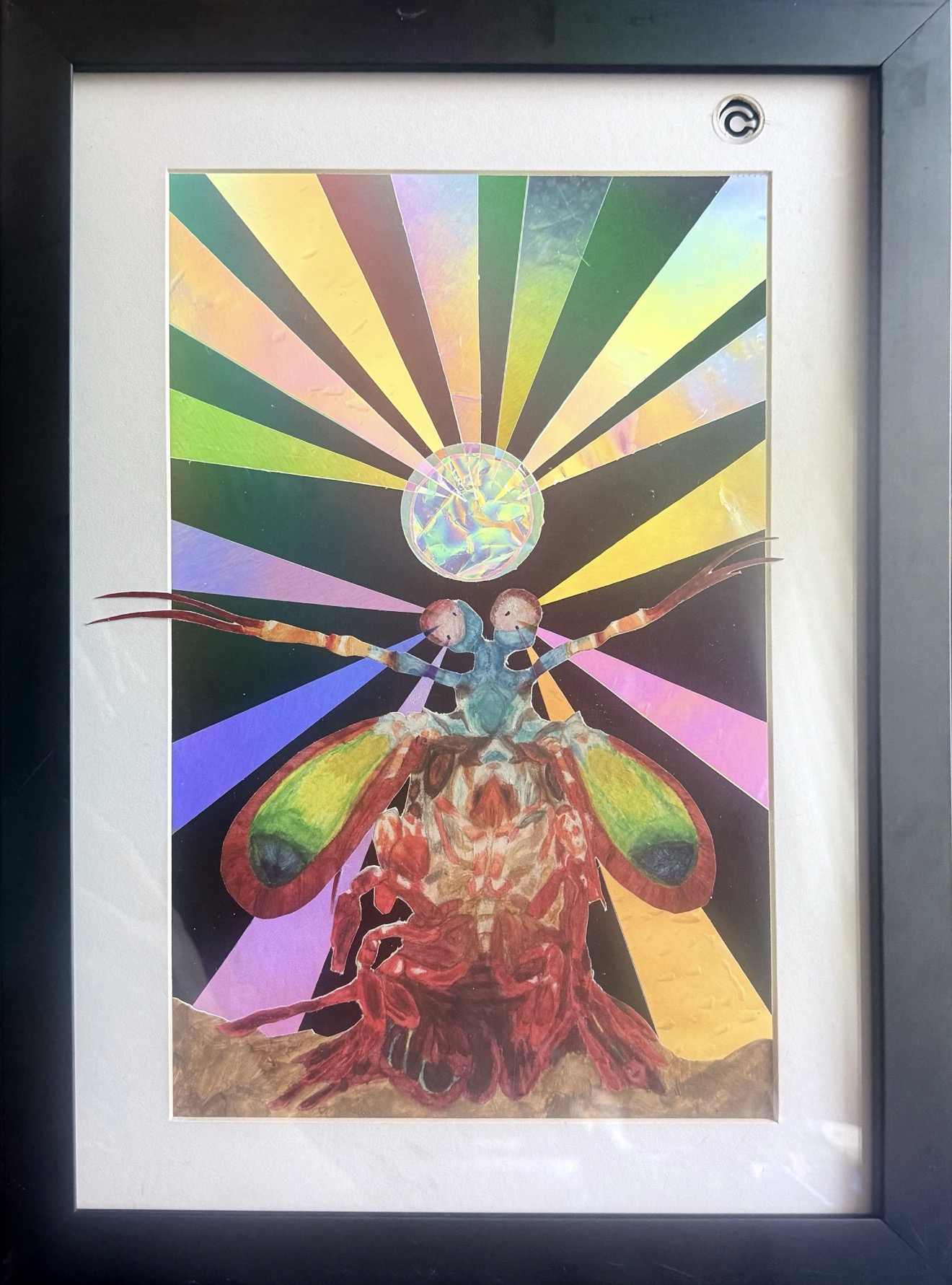
Expanded Perception: Peacock Mantis Shrimp is a multilayered work combining acrylic painting with polarized light art. From the shrimp's eyes, 6 colors emerge — representing wavelengths humans can see. Once viewed through polarized glasses, those colors transform and new ones are revealed. A whole world, previously invisible, is unlocked.
Viewers are encouraged to rotate the lenses of the glasses, view from different angles, and experiment with looking through one eye at a time — becoming an active part of the optical system rather than a passive observer.
The Cavitation Bubble
Above the shrimp is a bubble that appears only when viewed through polarized glasses. This references another peacock mantis shrimp superpower: their ability to punch so fast that a cavitation bubble forms, which collapses into a burst of high energy light and sound. These strikes are powerful enough to break aquarium glass.
The bubble's positioning above and between the shrimp's eyes also evokes the symbolism of a third eye — found across spiritual traditions as a sense that perceives beyond the ordinary five. Similar to the invisible light peacock mantis shrimp can observe, this artwork gently holds open the possibility of humans sensing the unseen.
Interaction & Rodaspecs
This piece pairs especially well with Rodaspecs — the polarized glasses I invented with individually rotatable lenses. Each eye can be tuned to a different angle, so each sees a different color of the artwork simultaneously. The viewer becomes an even more active component of the optical system.