Materials Engineering · Electrochemistry · Research
Transferring to Carbon Paper: Scaling-Up CO₂ to 1-Butanol Electrocatalysis
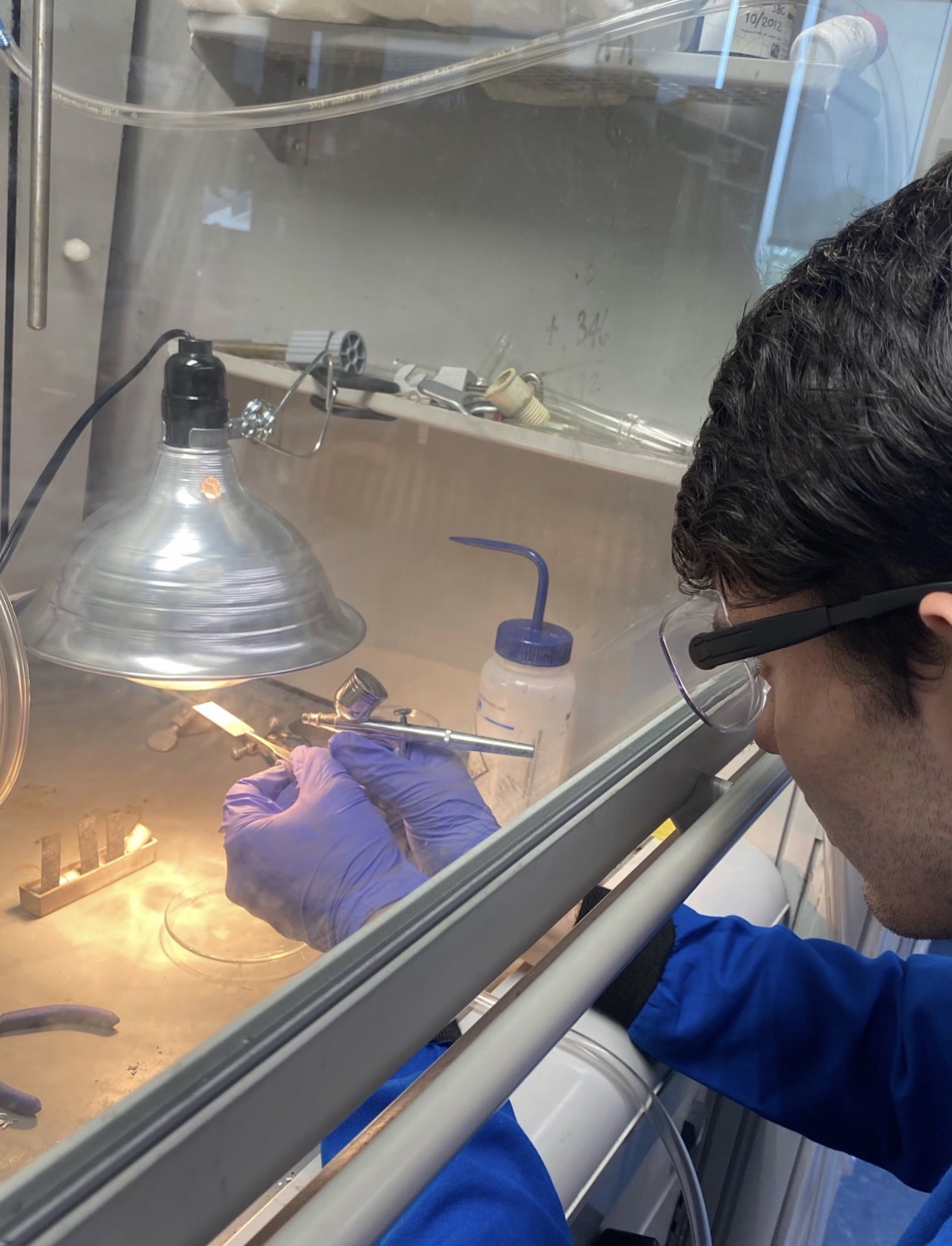
Investigated the potential scalability of an electrocatalytic process converting CO₂ into butanol — and developed a new electrode deposition method called pool casting in the process.
The Research Question
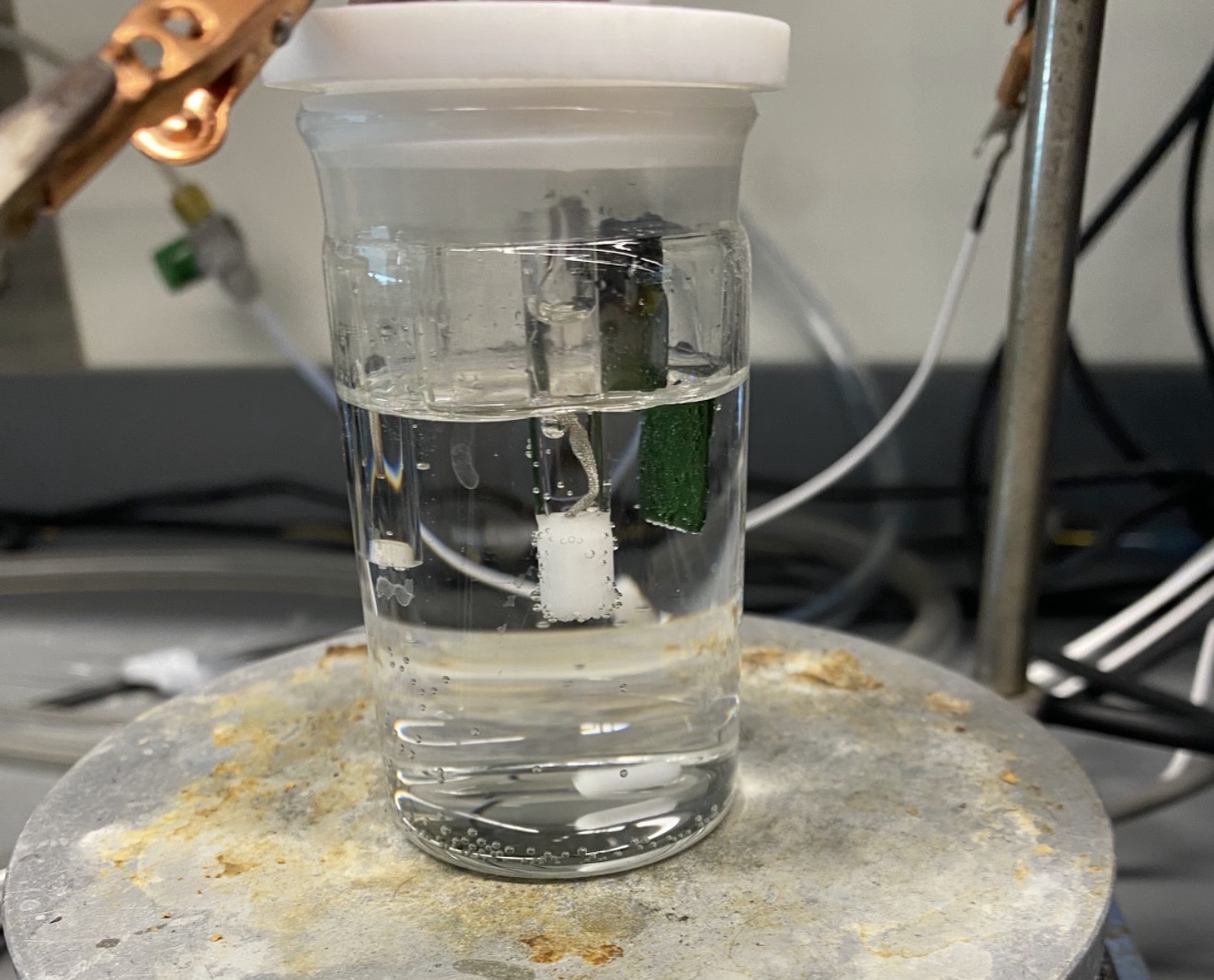
Previous work in the Bocarsly lab demonstrated that CO₂ can be electrocatalytically reduced to 1-butanol — a valuable fuel and chemical feedstock — using metal oxide electrodes. A natural next question is scalability: can this process be transferred from small-scale laboratory substrates to carbon paper, a substrate more compatible with industrial electrochemical cell design?
Carbon paper has properties desirable for electrochemical scale-up: it is porous, electrically conductive, and mechanically robust. However, standard electrode deposition methods designed for flat glass or silicon substrates do not translate directly to carbon paper's fiber-based architecture.
Pool Casting
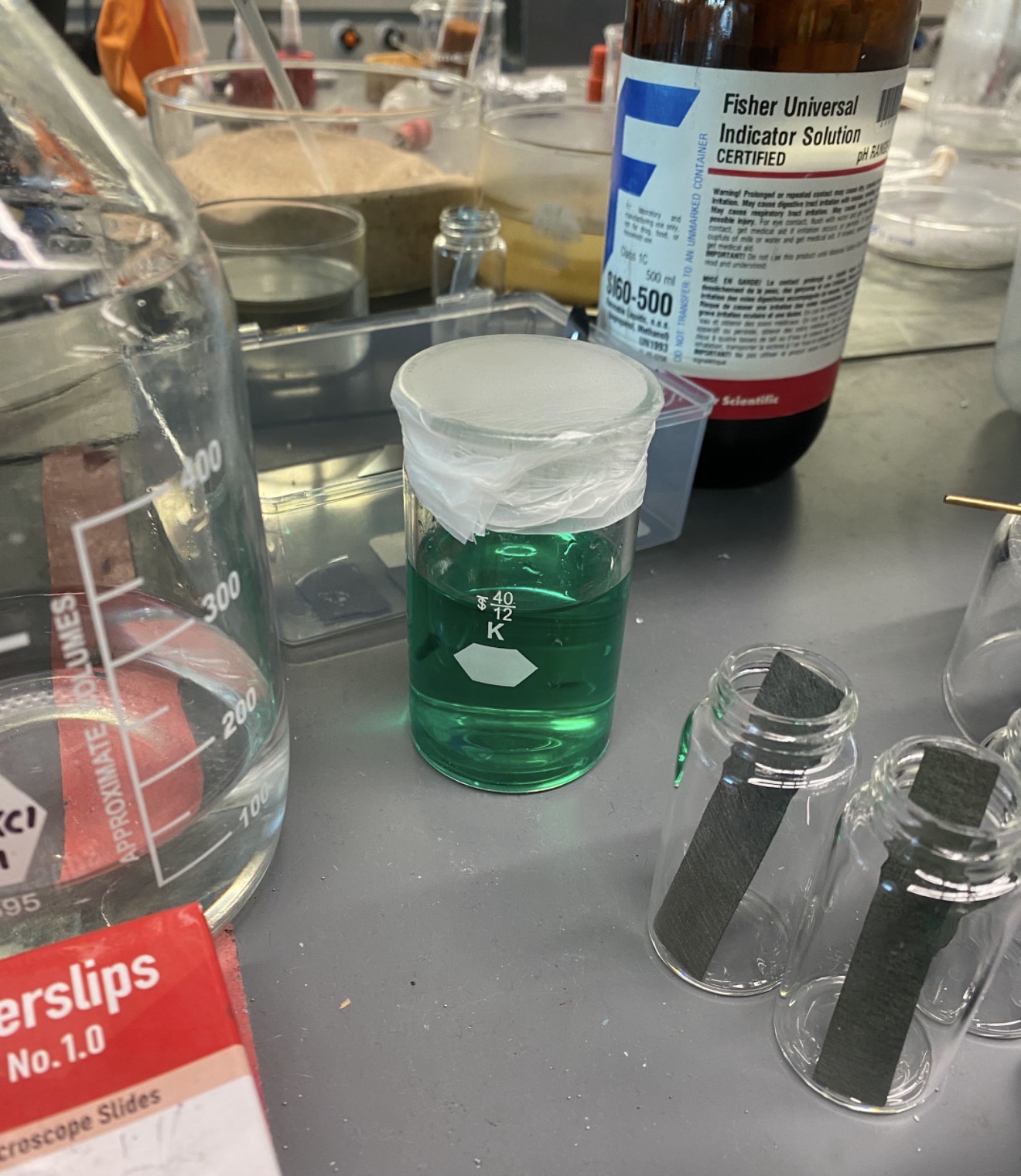
To address this, I developed a new deposition approach called pool casting. Rather than depositing precursor solution onto a substrate surface and spinning or drying it in place, pool casting immerses the carbon paper substrate in a precursor pool, allowing the solution to wick into the fiber network before controlled drying and calcination. This produces a more conformal, penetrating metal oxide coating suited to the three-dimensional pore structure of carbon paper.
Connection to Kaio Labs
This research forms part of the technical foundation underlying Kaio Labs — the startup I joined as Head Materials Engineer — where scaling up CO₂ electrochemical conversion processes is a central engineering challenge.